Supreme hears “On the Come Up”
On the Come UpSupreme hears “On the Come Up” and recognizes a possible hit before Brianna has released it. At a holiday giveaway, he listens to the song on her phone, praises its hook and verses, and offers to make calls after the holidays to build buzz. The exchange gives Brianna a concrete opening into the music business, but it also foreshadows the tension between Supreme’s commercial strategy and her determination to speak in her own voice.
The First Hearing
Supreme’s confidence in his ear for hits shapes the encounter. He cites “Swagerific” as proof that a simple song can succeed and says that one song is sometimes all it takes. Brianna recognizes how much she needs such a chance: she does not want to be back at the giveaway the following year, and she decides to show him the song rather than let his offer of help pass by.
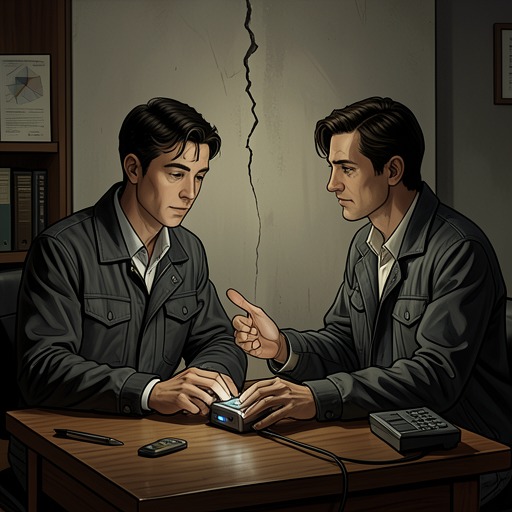
The exchange is not effortless. Brianna hesitates because her father had fired Supreme and Supreme’s son, Milez, had dissed her. Still, she knows Supreme helped make her father a legend and secured Dee-Nice a million-dollar deal. She asks for his opinion, gives him her phone, and watches while he listens through earbuds. His unreadable expression makes the wait difficult; after the song ends, he hands the phone back before his smile resolves Brianna’s uncertainty.
Supreme calls the song a hit and singles out its catchy hook and good verses. He says it could jump-start her career. The judgment matters because it is specific and immediate: rather than offering general encouragement, he responds to the recording itself and identifies a route from an unreleased track toward an audience.
An Offer to Build Buzz
The song has not yet been uploaded, so Supreme’s next step is practical. He tells Brianna to post it and text him the link, then offers to make a couple of calls to generate buzz. Because people are on vacation, he expects the effort to happen after the holidays; if he reaches the right people, he says, she could be on her way. Brianna is surprised that the opportunity might begin so simply, and Supreme confirms that it can.
That offer marks the transition from private evaluation to potential professional support. Supreme has already given Brianna his business card, but now his praise is tied to an actionable plan: release the song, send him the link, and let him use his contacts. The scene does not establish the later results of those calls; its significance is the opening itself, and Brianna’s decision to put her work before someone whose judgment and industry connections carry weight.
The Advice Behind the Opportunity
The first hearing also introduces the mixed character of Supreme’s mentorship. Later, after a confrontation in a parking lot, he warns Brianna that people will shape the incident into a headline and advises her to play whatever role they expect, using their assumptions to her advantage. His approach treats public image as something an artist can strategically perform. The advice is not simply a call to accept other people’s judgments: he presents it as a way to turn those judgments toward commercial advantage.
That strategy has a personal history. Supreme tells Brianna that when he met her father, Law was not a gangster: he had been in the church choir and was working to support Brianna’s mother and brother. Supreme says he encouraged Law to rap about street life and associate with the Garden Disciples to appear authentic, but that Law took the role seriously. He urges Brianna to remember the distinction between playing a role and becoming it. His account makes his help consequential but not neutral: he has experience creating marketable images, and he sees Brianna partly through the lessons he learned with her father.
The Song’s Public Meaning and Brianna’s Resistance
As “On the Come Up” becomes public, its reception shows the risk embedded in Supreme’s advice. News coverage identifies Brianna as a local rapper and describes the track as violent and popular with young listeners. During a later Hot 105 interview, Hype presses her about lyrics that he says suggest violence against police. Brianna rejects that interpretation and argues that the lyrics did not cause students to protest; the coverage, she says, ignores why they were protesting in the first place. When Hype admits that her performance caught him off guard, she points out that her father rapped about similar material at sixteen without prompting the same reaction. The dispute makes visible how her age and gender shape the way the song is judged.
Brianna’s own performance at The Ring ultimately states the boundary she draws around the role Supreme has described. Refusing words that are not hers, she rejects being treated as a puppet or a copy and says that speaking about what she sees does not mean claiming that violence as her identity. Her freestyle connects that artistic choice to her family and community: she is a daughter, a sister, and a mirror, while the public image imposed on her can make others richer if audiences accept it as the truth. The song that Supreme first hears as a potential career-launching hit therefore becomes more than a commercial opportunity. Its changing reception sharpens the central conflict between exploiting an expected image and retaining authorship over what the performance means.